


Staples - Deals & Shopping
3.1896.00 Reviews
App Specs
- Version
- 15.0.1
- Updated On
- License
- Free
- Downloads
- 1,000,000+
- Developer
- Staples Inc
- Categories
- Shopping
- Platform
- Android, iOS
Screenshots
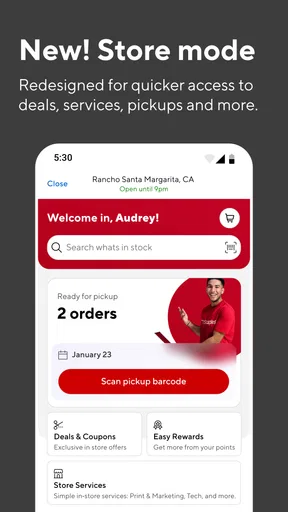
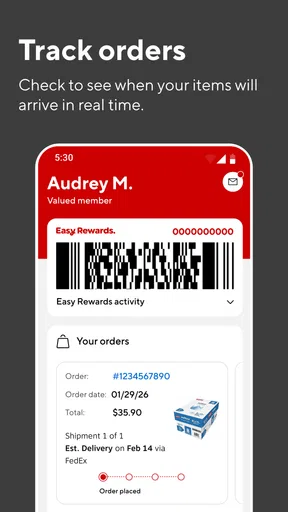
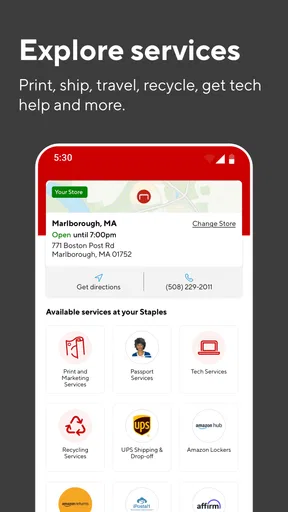
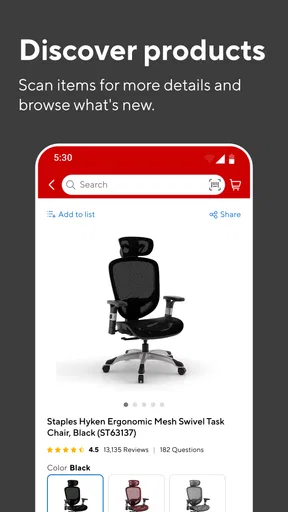
 Analysis by AppCompare
I approached Staples - Deals & Shopping as a practical shopping companion rather than an app I would open for entertainment. In my first week, its appeal came from having Staples browsing, savings, and account-related shopping tasks in one place. That sounds simple, but it matters when I am trying to buy office supplies quickly instead of comparing several browser tabs while standing in a store.
The app is free, aimed at everyone, and comes from Staples Inc. It belongs to the shopping category, so its value depends less on novelty and more on whether it makes repeat purchases easier. After the first few sessions, I found that distinction important: an app can feel useful on day one because it is new, yet still fail to earn a permanent place on a phone if it does not save time on the next visit.
What the first week feels like
The opening experience is built around a familiar retail question: what do I need, and can I get it conveniently? I used it with a short list in mind rather than browsing without a purpose. That approach made the app feel more focused. Looking for a particular type of paper, a desk accessory, or a basic school item is more rewarding than expecting the app to entertain me with endless discovery.
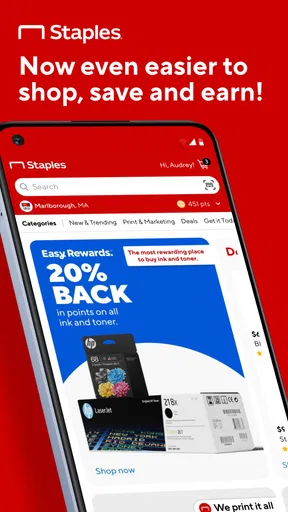
Its main strength is the connection between shopping and saving. The store summary, “Shop, earn and save,” describes the intended rhythm, but my experience was that the useful part comes from turning that rhythm into a routine. I can check an item, consider whether the current offer makes sense, and decide whether to continue immediately or wait. That is more practical than treating every promotion as a reason to buy.
One useful habit is to open the app before leaving for a Staples visit, not after arriving. I can review the item I want, think through alternatives, and avoid making a rushed decision in the aisle. This is especially helpful for purchases where a substitute would work just as well, such as notebooks, folders, printer paper, or basic writing supplies. The app is not replacing judgment; it gives me a better starting point for it.
I also found that the app makes more sense for planned shopping than for emergency buying. If I suddenly need one item within minutes, a familiar browser search or a direct store visit may be faster. When I have a list, however, the app becomes more useful because I can use the same destination for product research, savings checks, and purchase preparation.
The first-week excitement can come from discovering deals, but I would not confuse a discount with a saving. A lower price only helps when the item was already needed. My best use of the app was checking planned purchases and comparing the total value of buying now against waiting. That small discipline prevents the shopping feed from turning into a source of unnecessary spending.
Worth Reading Before You Choose

EA SPORTS FC Mobile 26 Is a Bigger Football Game, but It Takes Time

Flipboard Shows What News Apps Must Do Beyond the Feed

Switching to Android Auto Means Rethinking Your Driving Routine

Google Calendar Makes a Crowded Week Easier to Manage

Ludo King Makes the Most of the Minutes Between Plans

Baby Panda World Brings Quick Play to Modern Phones, but Its Game Library Feels Busy
Where it fits beside ordinary alternatives
Compared with using a mobile browser, the Staples app feels more direct when I already know I want Staples. A browser is often better for broad comparison across retailers, especially when I care about the cheapest available option rather than a particular store. The app is better when store-specific shopping, savings, and repeat purchasing are the priority.
Compared with a general shopping marketplace, Staples has a clearer identity around office, school, and workplace needs. That focus can reduce distraction. On the other hand, a large marketplace may offer a wider range of unrelated products or make cross-retailer price checking easier. I would choose Staples for a focused supply run, not as my only shopping tool.
Compared with visiting a store without preparation, the app gives me a chance to slow down. I can decide whether a deal is relevant before I am surrounded by displays. That is a modest advantage, but it is exactly the sort of advantage that can become valuable when repeated several times a year.
Does it keep earning space after the novelty?
The important test is what happens after the first few searches. Shopping apps often lose their appeal when the user has no immediate purchase planned. I think this one has a reasonable chance of remaining useful for people who regularly buy office supplies, school materials, printer consumables, or workplace basics. For someone who shops at Staples only once in a long while, keeping a dedicated app may feel unnecessary.
My month-to-month judgment would depend on whether I use the savings side intentionally. I would not open it every day. Instead, I would return when I have a shopping list, when a recurring supply is running low, or when I want to check whether a planned purchase is worth making now. That lower frequency is not a weakness by itself. A useful retail app does not need to become a daily habit if it reliably helps at the moments that matter.
A realistic example is a small home office. At the beginning of the month, I might notice that printer paper, folders, labels, and pens are running low. Rather than buying each item separately whenever it becomes urgent, I can gather the list, review the Staples options, and make one considered shopping session. The app earns its place if it helps me avoid forgotten items, unnecessary trips, and impulse substitutions.
Another strong use case is preparing for a new school term. A parent or student may have several categories of supplies to think about, and the convenience comes from organizing the search around a known retailer. I would still compare quality and price where it matters, but the app can serve as a planning checkpoint before the rush begins.
For a small business, the value is slightly different. The app is not a full purchasing system in my eyes; it is more useful for straightforward replenishment. If I need the same everyday supplies repeatedly, checking the app can support a simple monthly routine. If my needs involve complex approvals, detailed procurement records, or specialized business workflows, I would look for a dedicated business purchasing solution instead.
The app’s average rating is 3.1 from around 1.5 thousand ratings, with roughly 896 written reviews. I read that as a mixed signal rather than an automatic rejection. It suggests that the experience will not satisfy everyone equally, so I would judge it by my own shopping pattern. The app has passed the one-million-install mark, which shows that it is reaching a substantial audience, but popularity does not remove the need to decide whether its routine matches mine.
The recurring value depends on restraint
The phrase “earn and save” can encourage a useful routine, but it can also create a false sense of progress. I get the most value when I begin with a need, then use the app to improve the purchase. I get less value when I begin with a promotion and search for a reason to spend. That trade-off is central to the long-term experience.
My practical tip is to keep a short supply list outside the app, whether in a notes tool or on paper. When I open Staples, I already know what I am checking. This reduces browsing fatigue and makes it easier to distinguish a genuinely useful offer from a product that only looks tempting because it is featured prominently.
I would also group purchases by urgency. Items needed this week should be treated differently from items that can wait. That lets me use the app for planning without allowing every deal to become an immediate order. In my experience, this is one of the simplest ways to make a shopping app support a budget instead of quietly working against it.
Maintenance, friction, and the reasons it may wear thin
The maintenance burden is not dramatic, but it is real. A retail app needs attention from the user: I have to remember to open it before shopping, keep my list current, and decide whether the savings justify the purchase. If I am not already a Staples customer, those steps may feel like extra work compared with searching the web when a need appears.
Retail apps can also become tiring when the user has to sort through too many offers or repeatedly reconsider similar products. Even when the interface is convenient, shopping remains a decision-heavy activity. I prefer using the app with a clear goal because unstructured browsing can take longer than expected and make routine purchases feel more complicated.
Another source of fatigue is the gap between browsing and real-world availability. An app can help me identify what I want, but my final decision still depends on whether the item suits my needs and whether obtaining it is convenient. I would not assume that seeing a product in the app ends the decision-making process. For time-sensitive purchases, I would double-check the practical details before relying on the plan.
The current version is 14.9.0, and the app supports Android 9 or later. That makes it accessible to many users, although anyone with an older device should check compatibility before planning around it. The technical requirement is straightforward, but compatibility is part of the maintenance question: an app only helps if it runs comfortably on the phone I actually use.
Privacy and notification preferences are also worth considering in everyday use. I would keep only the alerts that support a real shopping habit and avoid allowing a retail app to become a constant interruption. If notifications start pushing me toward frequent browsing, I would reduce them and return only when I have a planned need. That keeps the app in a supporting role.
My biggest concern is not that the app is difficult to understand. It is that its usefulness may fluctuate with my shopping schedule. During a busy school or office-supply period, it can be genuinely practical. During quieter months, it may sit unused. That is acceptable for a seasonal tool, but users expecting a daily all-purpose shopping destination may find the experience less compelling.
Who should use it, and who should skip it?
I would recommend it to regular Staples shoppers, people who repeatedly buy office or school supplies, and anyone who likes planning purchases before entering a store. It is also a sensible option for shoppers who want a retailer-specific place to check savings rather than relying only on general search results.
I would be more cautious if I mainly shop by comparing every retailer, need a broad marketplace, or rarely buy the types of products Staples specializes in. In those situations, a browser or general shopping app may offer a better overview. I would also skip installing it solely because a promotion looks attractive; the app works best when it serves an existing shopping routine.
For users concerned about cost, the app itself is free, which removes the main barrier to trying it. The more important question is whether it changes purchasing behavior in a helpful way. Free access does not automatically make it valuable, so I would install it, use it for one planned shopping cycle, and then decide whether it genuinely saves time or improves my buying decisions.
One advanced but simple workflow is to use it as a two-stage tool. First, I browse only for products already on my list. Later, after I have decided what I actually need, I return to check savings and finalize the purchase. Separating discovery from commitment reduces impulse buying and gives the app a clearer job each time I open it.
My long-term verdict
After the novelty fades, Staples - Deals & Shopping is most convincing as an occasional but dependable planning tool. I would not keep it because I expect constant entertainment or daily discoveries. I would keep it because a repeat supply run can be easier when product browsing and savings checks are available in the same retailer-focused app.
Its lasting value depends on fit. Regular Staples customers can turn it into a monthly or seasonal habit: maintain a short list, open the app before shopping, evaluate deals against actual needs, and avoid browsing without a purpose. That routine gives the app a practical role instead of letting it become another unused icon.
The limitations are equally clear. It is not the best replacement for broad price comparison, and it may feel unnecessary for infrequent Staples shoppers. Promotional browsing can also become tiring if I do not set boundaries. The mixed average rating of 3.1 reinforces my view that expectations should stay practical rather than idealized.
Still, I think the app earns a place on the phone of someone who regularly buys supplies from Staples. The free price and Everyone age rating make trying it easy, while the focus on shopping and saving gives it a clear purpose. My recommendation is simple: use it with a list, return when you have a real purchase to plan, and judge it by the time and unnecessary spending it helps you avoid.
For me, that is enough for a qualified recommendation. It is not an essential shopping app for everyone, but it can become a useful recurring tool when Staples is already part of your routine. The real test is not the first deal you find; it is whether the next planned shopping trip feels more controlled and less wasteful.
Pros
- Easy access to weekly deals
- coupons
- and limited-time promotions.
- Convenient in-store pickup can save time and reduce delivery costs.
- Useful search and filters help locate office and school supplies quickly.
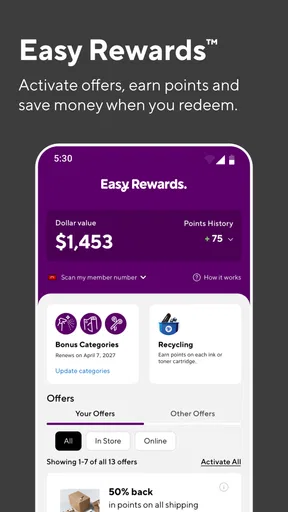
- Rewards members may receive personalized offers and purchase benefits.
- Product pages typically include availability and store information.
Cons
- Some promotions require membership or specific coupon conditions.
- Inventory and prices may vary between stores and online listings.
- The app may request location access for nearby store features.
- Large catalogs can make it difficult to compare similar products.
- Delivery fees and minimum-order requirements may apply to some purchases.
FAQs for Staples - Deals & Shopping
What is Staples - Deals & Shopping used for?
Staples - Deals & Shopping is the official shopping app for browsing and purchasing office supplies, technology, furniture, school essentials, printing products, and business-related items. After installing it, users can search the catalog, compare prices, view product details, check availability, and manage orders from a mobile device. It is designed for both everyday shoppers and small businesses that regularly buy workplace supplies.
Can I use the Staples app to find deals and coupons?
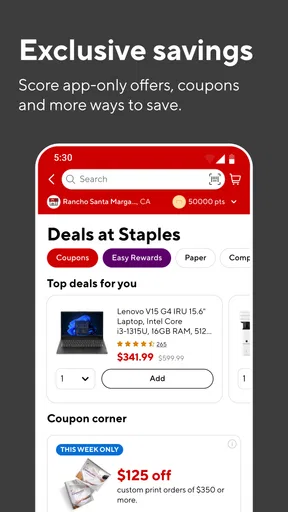
Yes. The app typically highlights current promotions, weekly deals, clearance offers, rewards-related savings, and eligible coupons. Available discounts can change frequently and may depend on the product, location, membership status, or purchase method. Before completing an order, it is worth checking the offer conditions carefully, because some promotions exclude certain brands, services, marketplace products, or already discounted items.
Does Staples - Deals & Shopping support in-store pickup and delivery?
The app can help users choose among available fulfillment options, which may include shipping, store pickup, and, in selected areas, same-day or local delivery. Availability depends on the item, inventory at nearby stores, location, and current service coverage. The app displays the options during shopping or checkout, so users should enter their location and review the estimated timing before placing an order.
Can I use the app for Staples printing and other services?
Besides selling products, Staples offers services such as document printing, copying, scanning, binding, signs, business cards, and related project solutions. The app or connected Staples services may allow users to explore service information, upload files, request prints, or locate a nearby store, depending on the region and the specific service. File requirements, prices, turnaround times, and supported formats should be checked before submitting a project.
Is Staples - Deals & Shopping free, and what should I know about privacy?
The app is generally free to download and use, although purchases, delivery charges, printing services, and other optional products cost extra. Some features may require signing in or creating a Staples account. As with most retail applications, it may request information related to accounts, orders, location, device activity, and payment processing. Before installation, users should review the current app-store privacy details and permissions, especially if they prefer not to share location data.


